History and Scope
ACL’s investment in No Wrong Door began in 2003 with grant funding to aging and disability resource centers (ADRCs) to develop a single referral process for older adults and people with disabilities. Over time, state-level coordination became necessary to better support partnerships between ADRCs, area agencies on aging (AAAs), centers for independent living (CILs), and other agencies and organizations that provide services and supports.
In all cases, a state’s No Wrong Door system is designed to serve all populations who may need long-term services and supports, regardless of who is paying for those services and supports. A system is NOT supposed to create new infrastructure, rather it makes existing infrastructure more efficient.
In a No Wrong Door system, multiple agencies at state and local levels coordinate to improve how individuals navigate. The No Wrong Door approach achieves this goal through outreach, streamlined assessments, and creating person-centered plans. A multi-agency governance approach ensures coordination across the state.
No Wrong Door Key Elements
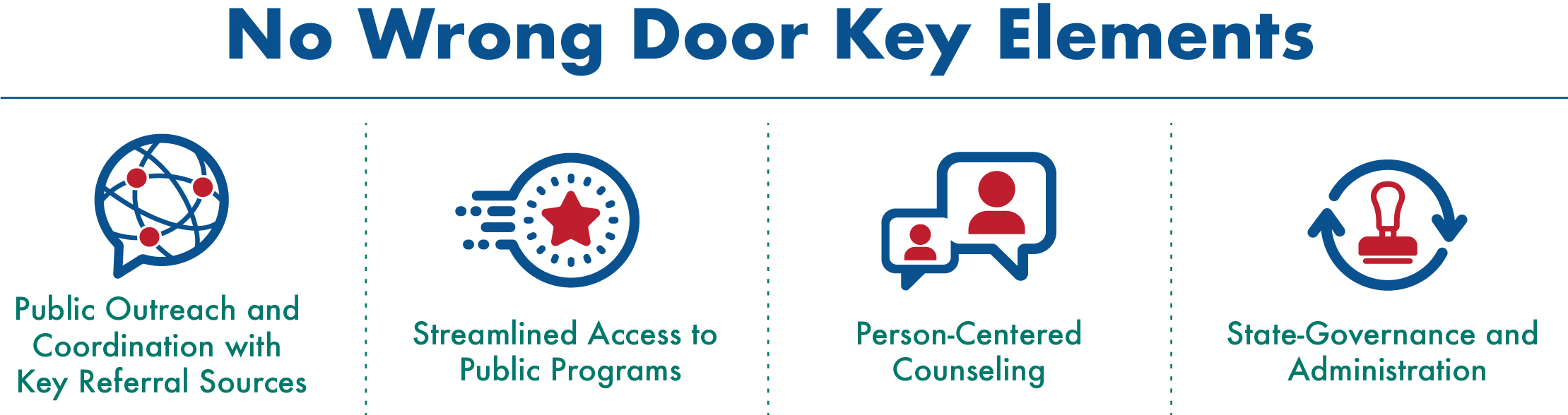
Each No Wrong Door system requires a foundation built from four key elements designed to help states effectively transform their access systems for all populations and all payers:
- Public Outreach and Coordination with Key Referral Sources
Coordinating outreach and public education through key referral sources across community-based organizations, state agencies, and technology systems that enhance cross-referrals and integrated partnerships with providers. - Person-Centered Counseling
Developing and adhering to standards and training for person-centered counseling across the workforce to facilitate informed choice, promote independence, and support individuals and caregivers in meeting their preferences and goals. - Streamlined Eligibility to Public Programs
Improving efficiency and effectiveness of intake, assessment, application, and eligibility determination processes through coordinated information sharing that streamlines the continuum of access to services. - State Governance and Administration
Strengthening No Wrong Door system operations through a multi-agency governing body to lead the design, implementation, and ongoing administration of related policy, stakeholder inclusion, sustainability, continuous quality improvement, technology infrastructure, and resource allocation.
Among the key learnings from past federal investments in No Wrong Door is the critical role of state leadership in the design, implementation, and ongoing administration of a coordinated access system. Many states (highlighted in blue below) have legislation or gubernatorial action to define or codify No Wrong Door-related functions, which include a state statute and state budget allocations. In addition to legislative action, states are working toward multisector plans for aging,which can be a lever for operationalizing and sustaining No Wrong Door.
States With Legislative Support for No Wrong Door
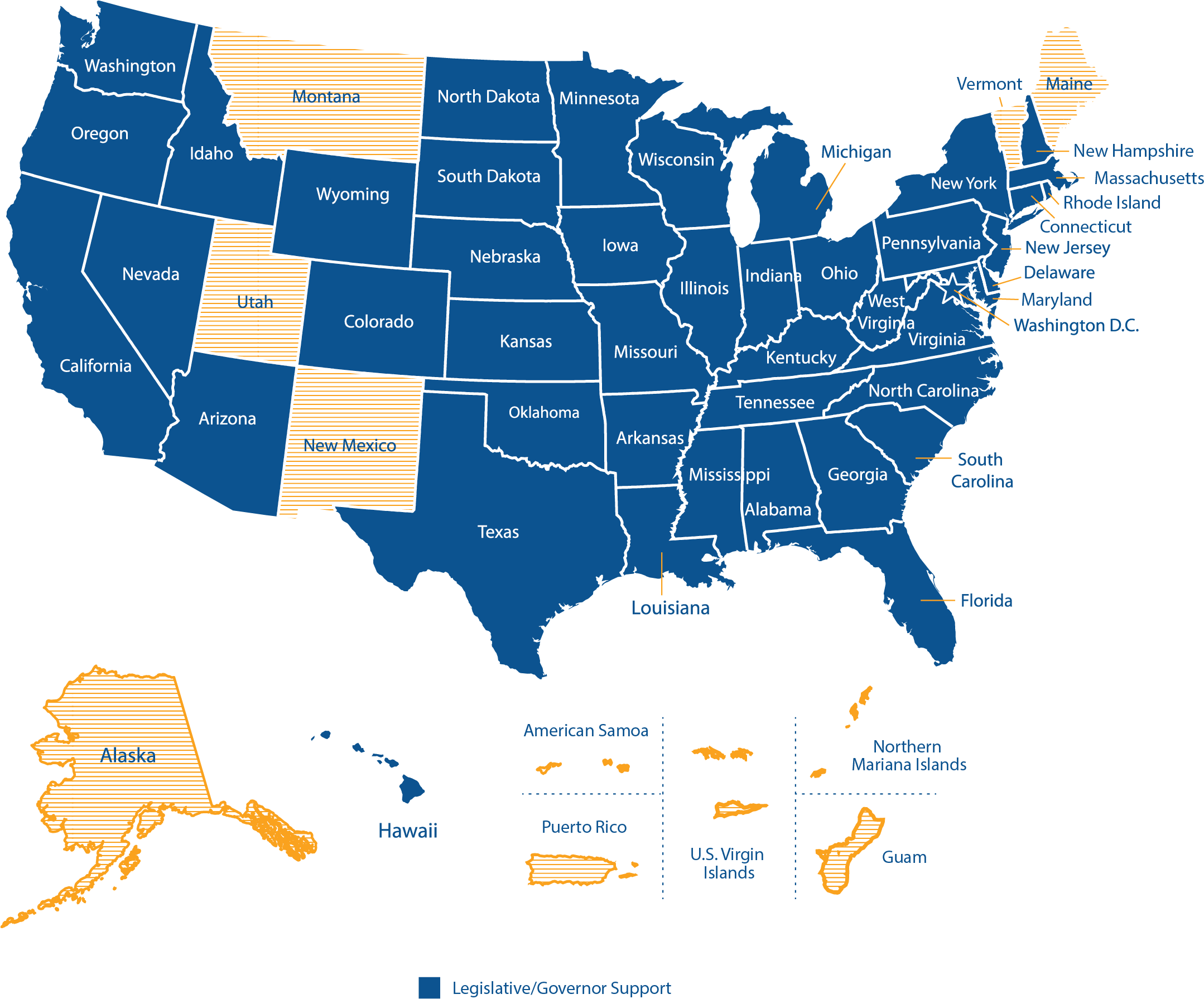
Although No Wrong Door system infrastructure is present in all 56 states and territories, not all have codified legislative or executive gubernatorial support. If your state or territory has updates to this map, please reach out to NoWrongDoor@acl.hhs.gov.
Why No Wrong Door?
Long-term services and supports (LTSS) can be complicated, and many people have to navigate systems on their own. In their words:
![No Wrong Door focuses on making the system work better for people. One consumer said, "Each agency should let the other one know what [they have] available...They need a better networking system."](/sites/default/files/inline-images/work-better-nwd_0.jpg)