


Person-centered counseling (PCC) addresses the whole person and allows individuals to be engaged in the decision-making process about their options, preferences, values, and financial resources. When PCC is employed, individuals in need of services or who are planning for the future have access to one-on-one counseling in the home, community residence, acute care hospital, school settings, or other settings based on the individual's needs. PCC improves access to care by establishing streamlined partnerships and using appropriate technology and resources that put the focus on the needs of people receiving support and their caregivers.
A person-centered system recognizes that every individual is unique and that the system must be able to respond flexibly to each person's situation, strengths, needs, and preferences. PCC is much broader in scope than any formal assessment or eligibility determination process tied to a public or private program.
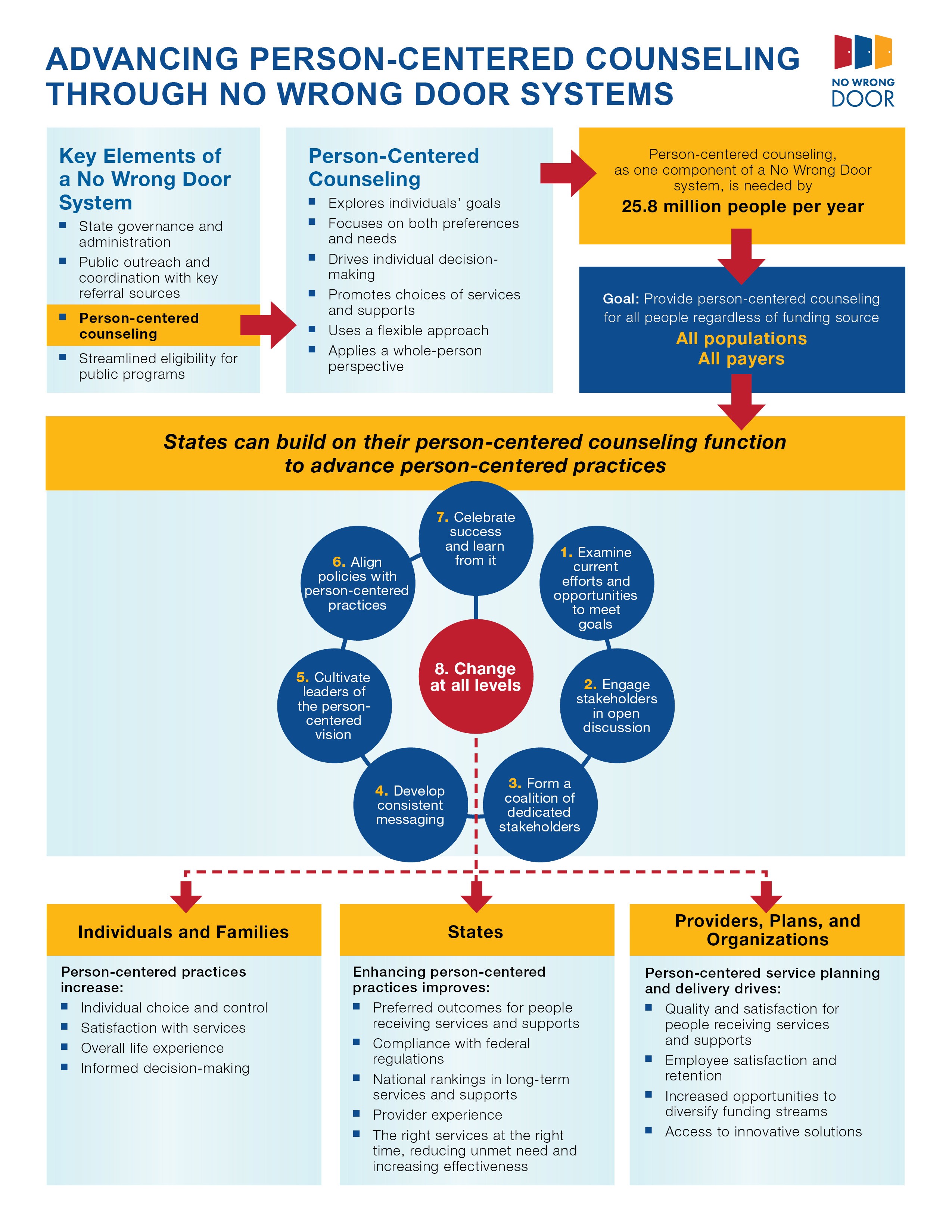
Person-Centered Counseling is at the heart of every No Wrong Door system
Resources
ACL offers free access to course 1 of the Person-Centered Counseling Training Program.This access will take you to a registration page where you must first create a log-in for the Elsevier platform. Once registered, you will automatically be assigned to the course. If you or your agency or organization wish to purchase the remaining courses, please contact nowrongdoor@acl.hhs.gov for pricing and access information.
- Course 1: Introduction to No Wrong Door
-
The first course introduces the vision, values, and key structures of the No Wrong Door system and introduces the PCC professional role. This course is designed for professionals and community members who have an interest in understanding or implementing aspects of the No Wrong Door system.
- Course 2: Person-Centered Thinking and Practice
-
Person-Centered Thinking and PracticeA prerequisite to the Person-Centered Planning and Implementation course, this course introduces key terms and approaches of person-centered thinking taught by The Learning Community for Person Centered Practices (TLCPCP).
- Course 3: Person-Centered Planning and Implementation
-
Person-Centered Planning and ImplementationThis course is designed to help the learner understand their role in person-centered planning. This course focuses on developing a formal person-centered plan and outlines a process that No Wrong Door counselors can use.
- Course 4: Who We Serve
-
This course orients learners to the different groups of people who may seek NWD services, how to be more culturally sensitive to the variety of cultures they may represent, the different types of disabilities, and the varied and unique life experiences they have had. To help person-centered counselors provide effective and appropriate PCC, this course introduces services a person might be seeking through the NWD system.
- Course 5: Person-Centered Access to Long-Term Services and Supports
-
Person-Centered Access to Long-Term Services and SupportsThis course defines long-term services and supports (LTSS) and describes considerations in supporting access to LTSS, including a wide range of public and private programs, services, and supports. This course discusses ways to help people combine available resources to meet their individual preferences.
- Course 6: Protection and Advocacy
-
This course describes the Protection and Advocacy (P&A) System and orients learners to the P&A role of PCC professionals working in the No Wrong Door system. This course provides information on defining and identifying various types of abuse, neglect, and exploitation, as well as the responsibilities of mandated reporters.