



Returning home from the hospital after a health event, such as a stroke or a fall, is often the moment when an individual and their family are most in need of accessing services. A key function of a No Wrong Door system is to serve as a bridge to facilitate the successful transition of individuals with LTSS needs who are being discharged from acute care settings back to their own homes. The No Wrong Door system helps arrange for the community services and supports a person needs to remain at home and avoid unnecessary and costly hospital readmissions.
Healthcare entities and community-based organizations are increasingly recognizing the importance of partnerships to fully address a person’s overall well-being. These partnerships address health-related social needs, such as housing instability, food insecurity, and lack of transportation.
No Wrong Door: Increasing Access to Community Living Through Care Transitions
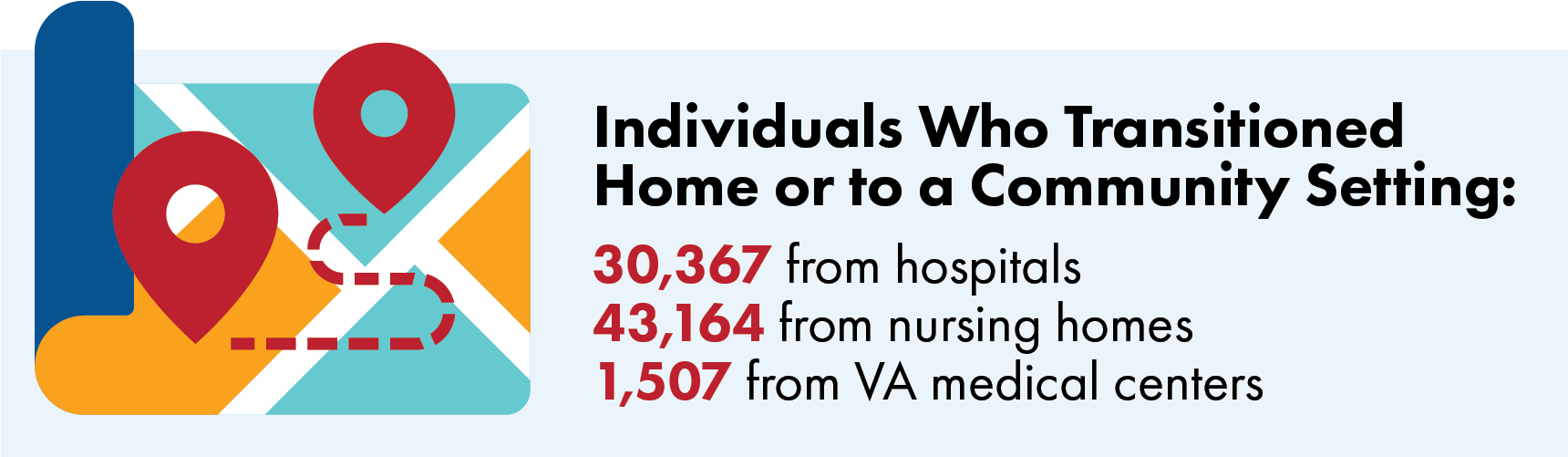
 Aging and disability resource centers (ADRCs) and other No Wrong Door partners across the country serve as a resource for acute, primary, and related health professionals that provide the healthcare system with community-based services and supports to improve quality of life for people with LTSS needs.
Find care transition resources
Community Care Hubs
A community care hub (CCH) organizes and supports a network of CBO providers that aids the No Wrong Door goal of increasing access to services for individuals with unmet needs. CCHs and other No Wrong Door partners serve the same population of high-cost, high-need individuals, regardless of whether they enter the access system via an ADRC or a healthcare organization. CCHs specialize in breaking down silos and bridging healthcare and community-based care.
 Each CCH centralizes administrative functions and operational infrastructure to enable effective, sustainable partnerships between CBOs and healthcare. The administrative and infrastructure aspects include contracting with healthcare organizations; payment operations; referral management; service delivery fidelity and compliance; and technology, information security, data collection, and reporting.