



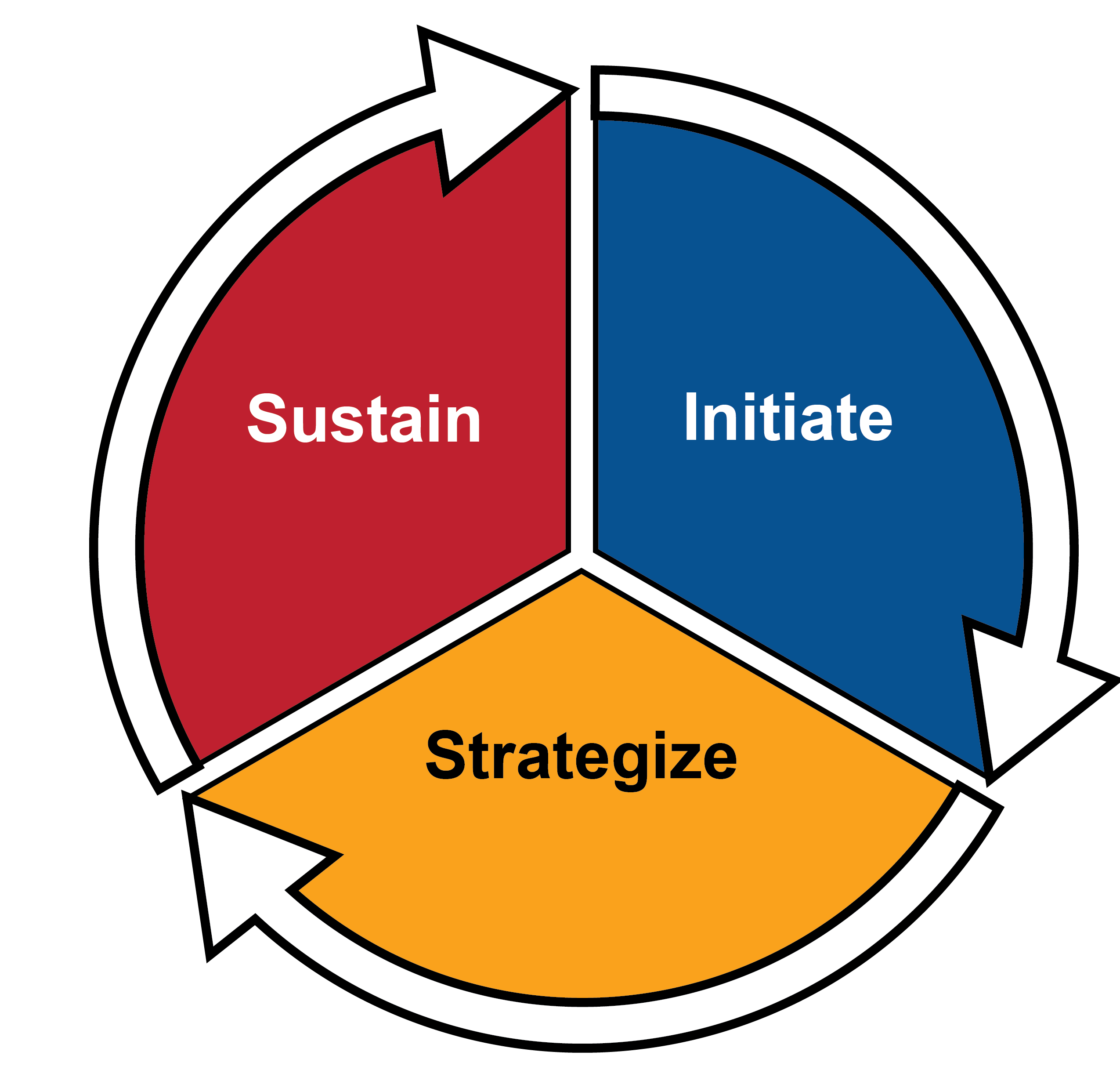
The Partnership Framework outlines a practical approach for teams to build and strengthen cross-sector partnerships over time. The framework is organized into three important steps: Initiate, Strategize, and Sustain. As detailed in the graphic below, these steps are not meant to be linear and should be revisited throughout various phases of building partnerships. Changes to partners, programs, or systems should prompt teams to reassess each step.
Through the HSRC’s 2024 and 2025 HSPA technical assistance opportunity, state teams strengthened coordination across health, housing, homelessness, aging, and disability systems. The experiences, outcomes, and best practices from HSPA states inform this page.
- Initiate: Start and align (or re-align) the partnership
-
Focus on building a shared understanding of current work, priorities, and challenges within and across systems before setting partnership goals.
Core actions:
- Engage people with lived experience to serve as advisors and co-designers to inform priorities, design, and success. Their involvement will ensure decisions address real barriers people face when accessing housing and services.
- Identify essential partners, decision-makers, and champions.
- Share current roles, programs, priorities, and constraints across partners.
- Agree on a shared purpose and desired outcomes for the partnership.
- Define partnership roles (e.g., conveners, leaders, advisors).
- Build trust by openly discussing priorities, activities, and challenges.
- Establish a meeting cadence, decision-making norms, and communication methods.
HSPA example:
In Michigan, state housing, health, and aging agencies began their work by meeting to explain each agency’s role, current programs, and constraints. These early conversations helped partners understand where they were serving the same people and agree upon shared priorities. This foundation supported later coordination efforts, including streamlining access to housing and services.
- Strategize: Plan together and set priorities
-
Strategize based on identified gaps, duplication, capacity, and impact.
Core actions:
- Map available housing and service resources from each partner.
- Identify gaps and areas of duplication.
- Understand partner interests and influence.
- Decide on shared goals to address gaps, reduce duplication, and meet partnership priorities.
- Select one or two coordinated approaches or initiatives to pursue together.
- Agree on desired outcome measures (e.g., increased housing stability, referral timeliness, expedited service access), and determine what data each partner can share to track progress and how often to evaluate progress.
HSPA example:
In New Hampshire, housing and Medicaid agencies used asset mapping to identify gaps in tenancy supports. Partners established shared points of contact, defined each agency’s role in the referral process, and standardized hand-off procedures across agencies. As a result, providers had clearer guidance, referrals moved more quickly, and people experienced fewer delays when connecting to needed housing‑related services. - Sustain: Keep the work going long-term
-
Sustain by reviewing partnership-level outcomes and assessing measures regularly.
Core actions:
- Create a clear decision-making structure.
- Develop written roles and agreements, such as memorandums of understanding.
- Set a recurring meeting schedule and develop shared workflows.
- Create consistent communication protocols.
- Align and braid funding where possible.
- Review shared partnership data regularly (e.g., referral volume, timeliness, housing stability outcomes) and adjust roles, workflows, or strategies based on learnings.
HSPA example:
In Vermont, partners from housing, health, aging, and disability agencies used their participation in HSPA to strengthen long‑term coordination. The team agreed on a regular meeting cadence, created a shared workplan to track priorities and responsibilities, and established written agreements that clarified decision‑making roles. This structure helped the partnership continue functioning through staff transitions and changing priorities, supporting consistent coordination across housing and service systems over time.