


Disasters and other emergencies can happen at any time, anywhere, and vary in magnitude. Older adults and people with disabilities often have unique needs during a crisis. For example, approximately half of those 65 and older have two or more chronic health problems (such as heart disease, diabetes, or Alzheimer’s disease), which can make them more vulnerable during periods of time without food, water, shelter, or adequate rest. People with disabilities also may have underlying health conditions that increase their risks during a crisis or may require services and supports that are often scarce during a crisis event.
That’s why planning to meet the needs of older adults and people with disabilities — at the community and individual level — is so important.
We’ve compiled some resources and tools to help! You can browse by topic below, or visit Ready.gov to find a wide variety of resources for preparedness planning, such as several social media toolkits, including one for National Preparedness Month. The HHS Administration for Strategic Preparedness & Response also has information and resources that may be useful.
Resources for Weather and Natural Disasters
During a weather incident or natural disaster, be sure to follow local news and weather reports, as well as state and local government guidance. Below are some resources for planning and responding to some of the most commonly occurring emergencies.
- Resources for Weather and Natural Disasters
-
- Earthquakes
- Extreme Heat
- Floods
- Hurricanes
- Tornadoes
- Tsunamis
- Wildfires: Ready.gov and CDC
- Winter Weather
- Earthquakes
Safety During Emergencies
Maintaining safety during emergency situations can be particularly challenging for older adults and people with disabilities. Explore these some resources to learn about emergency safety issues and how to prepare.
- Safety Resources
Emergency Preparedness for Older Adults and People with Disabilities
Everyone should prepare for potential crises and plan how to respond. Providers of long-term services and supports must train staff on emergency actions, including evacuation, lockdown, and sheltering in place. Community leaders and first responders must be prepared to support the health and safety of older adults and people with disabilities, engage them in emergency planning, and — to the maximum extent possible — provide services and supports in shelters.
Ensuring the well-being of older adults and people with disabilities during a crisis requires a whole community approach to preparedness.
- Individual Preparedness: Best Practices and Resources
-
Older adults, people with disabilities, and caregivers can take steps to prepare for emergencies. Most older adults and people with disabilities live in the community. Many live alone and require long-term services and supports to continue living independently in the community. Without appropriate contingency plans, individuals with mobility limitations, those who rely on battery- or electrically powered medical devices or durable medical equipment, and those with other functional needs may be at greater risk during a crisis. However, by assessing each person’s unique needs, person-centered plans can be developed to accommodate those needs and maximize independence.
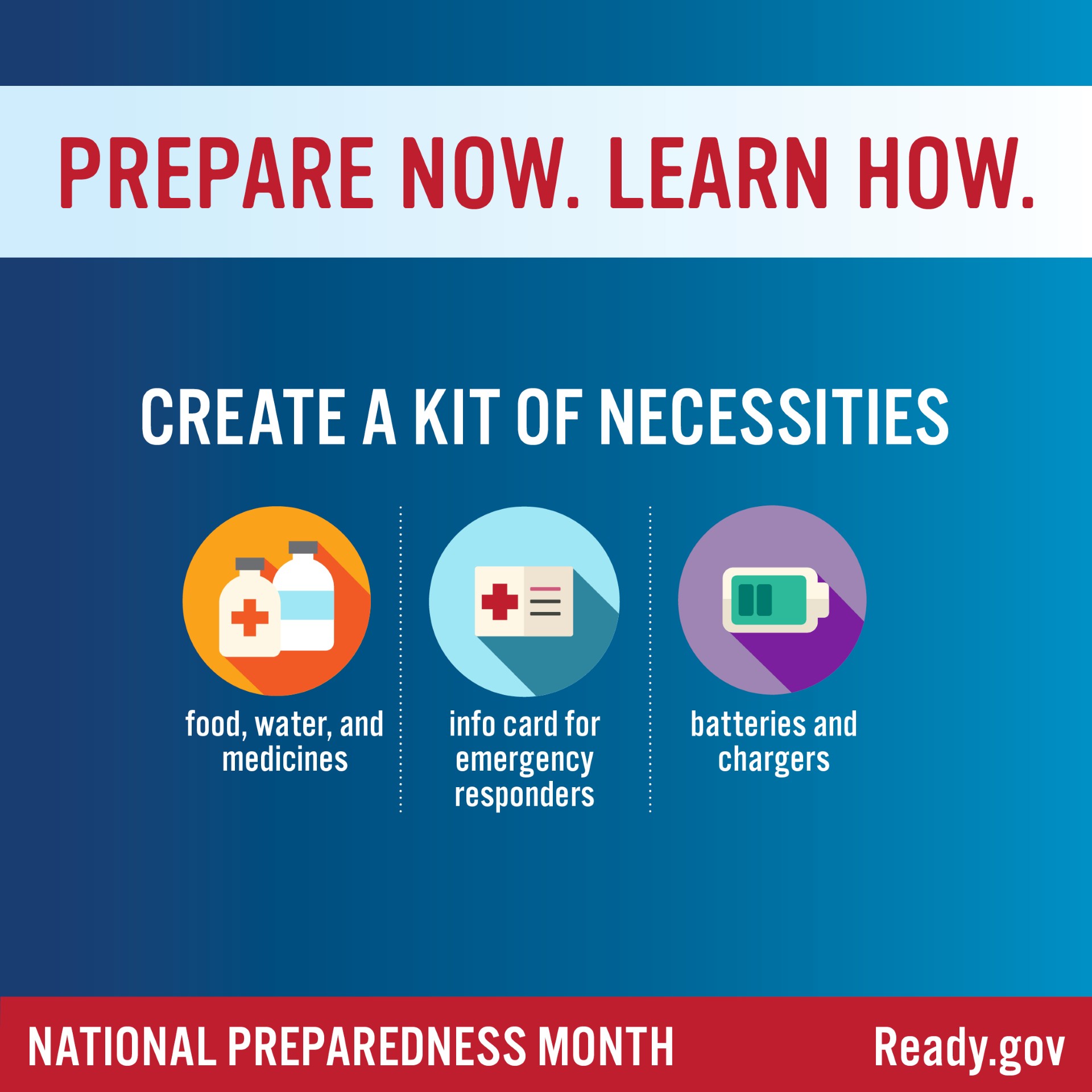
At a minimum, everyone (with the assistance of their caregiver, if necessary) should create an emergency kit. This should include medication, food, water, batteries or chargers, and any supplies that pets or service animals may need. It should also include the locations of nearby shelters.
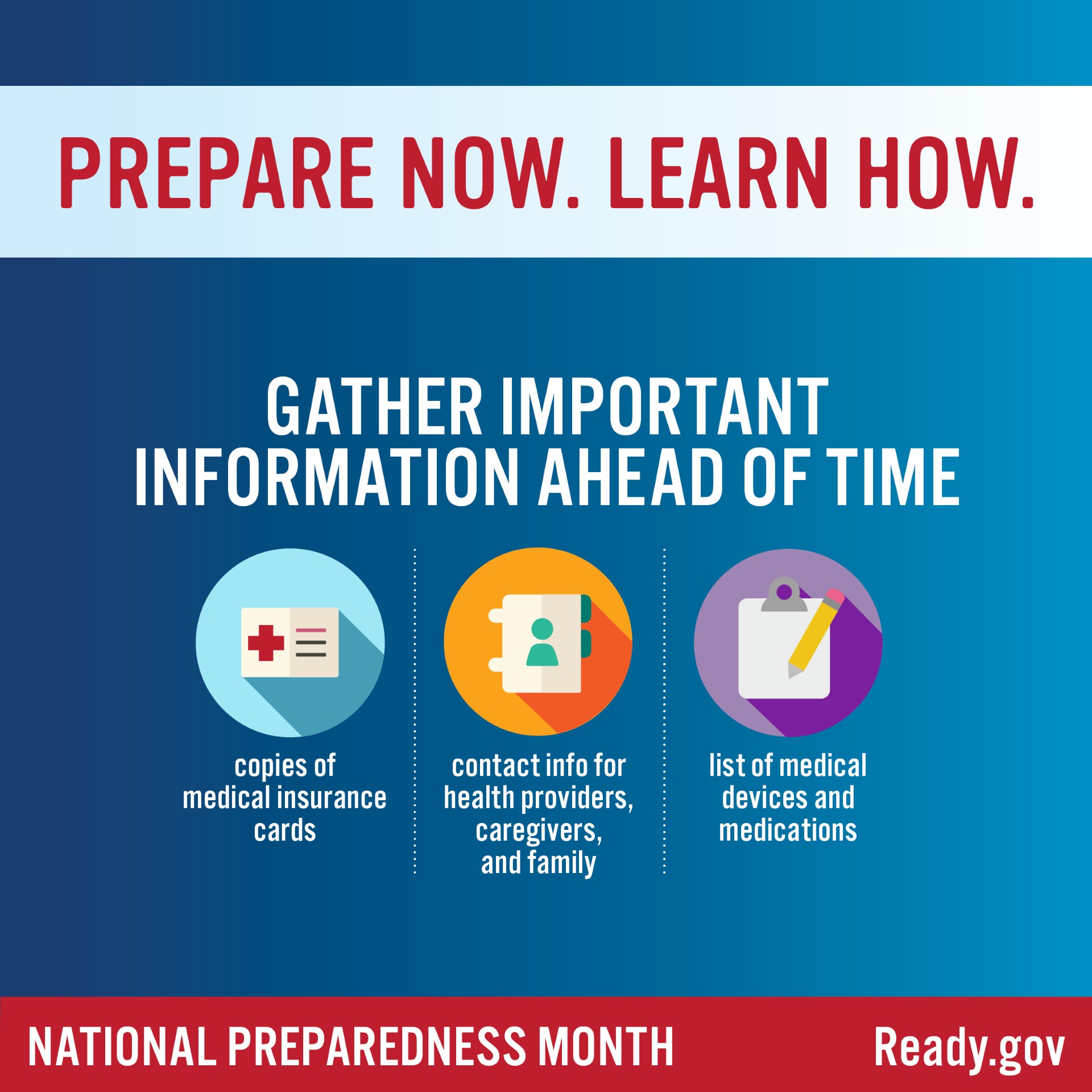
ACL has created two tools that are also important parts of an emergency kit. This Medical Information Card captures important information that could be needed by emergency responders and medical personnel during a crisis. The Communication Assistance Card is a tool to help first responders assist a person whose disability may make it difficult for them to communicate their needs.
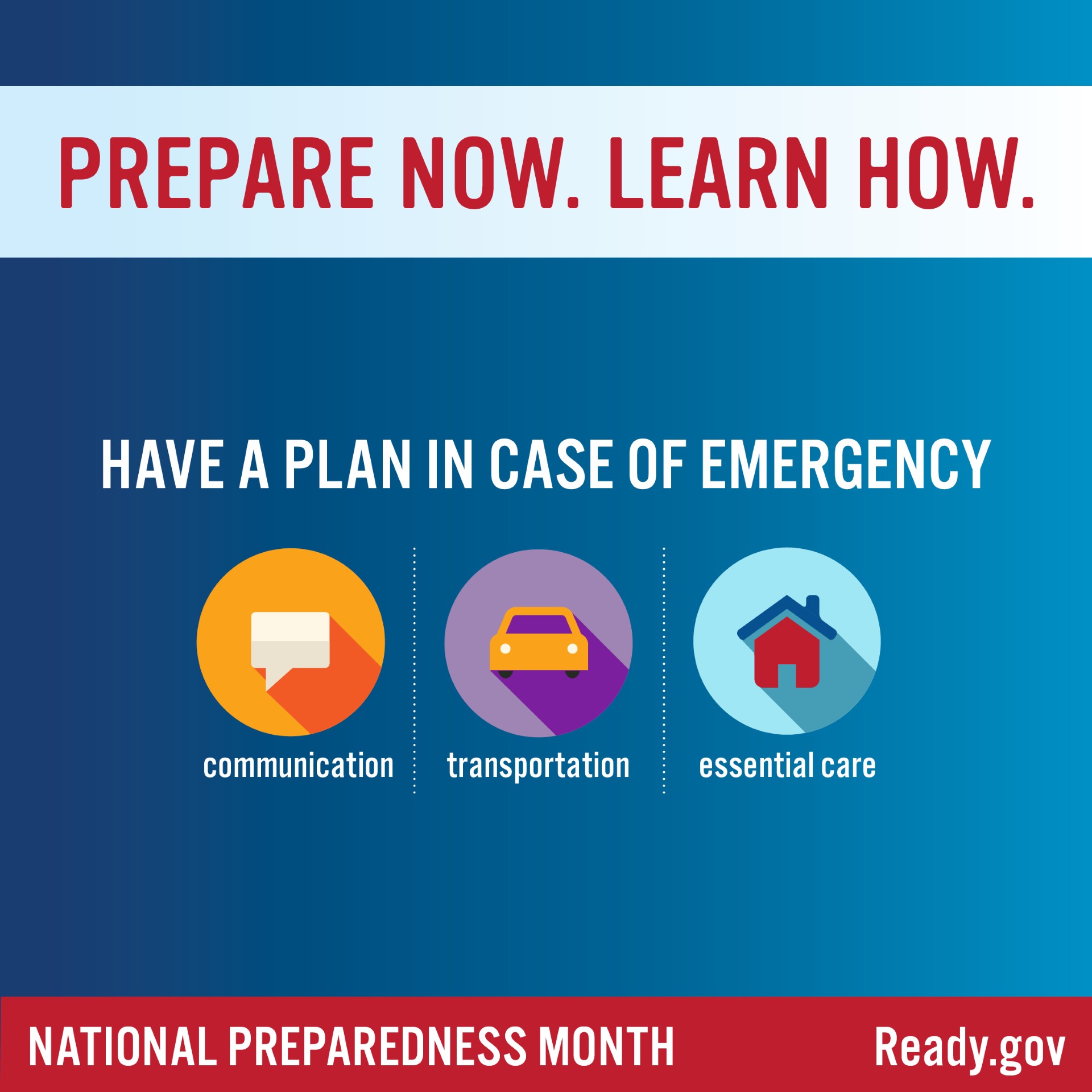
Individuals should also talk to friends, family, and neighbors to create a support network that can help with communication, transportation, and essential care during periods of time when other community-based services and supports are unavailable.
General Resources:
- CDC Prepare Your Health — Resources on health and well-being for emergency preparedness and response.
- Ready.gov: Pets and Animals — Resources on planning for pets and animals during emergency events.
- Emergency Power Planning for People Who Use Electricity and Battery-Dependent Assistive Technology and Medical Devices
- FEMA Preparedness Research — Preparedness research plays an important role in strengthening individual and community preparedness. Explore these research resources to learn about FEMA’s National Household Survey and its protective action research that can help advance preparedness efforts.
- SAMHSA's Disaster Distress Helpline — 24/7, 365-day-a-year crisis counseling and support to people experiencing emotional distress related to natural or human-caused disasters. Call 1-800-985-5990 or text TalkWithUs to 66746 to connect with a trained crisis counselor.
- Rx Open — Resource that helps patients find nearby open pharmacies in areas impacted by disaster.
Mobile Apps:
Resources for Caregivers:
- The Disaster Preparedness Guide for Caregivers is a guide from FEMA that provides information on three essential steps that can help caregivers feel more prepared when disaster strikes: assessing needs, engaging a support network, and creating a plan.
Resources for People with Disabilities:
- The Disability Information and Access Locator (DIAL) helps people with disabilities get connected to information about state and local community organizations that support independent living.
- Ready.gov: Emergency Preparedness Resources for People with Disabilities
- CDC: Emergency Preparedness and Disability Inclusion
- CDC: Emergency Preparedness for People with Disabilities
- The Partnership for Inclusive Disaster Strategies
- Emergency and Severe Weather Resources — Southeast ADA Center
- Red Cross: Disaster Safety for People with Disabilities
- Green Mountain Self-Advocates: Are You Prepared?
- Green Mountain Guide for Emergency Planning
Resources for Older Adults:
- Eldercare Locator connects callers to services for older adults and their families: 1-800-677-1116.
- Ready.gov: Emergency Preparedness Resources for Older Adults
- National Institute on Aging: 10 Emergency Kit Essentials
- National Institute on Aging: Disaster Preparedness and Recovery for Older Adults
- National Institute on Aging: Hot Weather Safety for Older Adults
- Red Cross: Emergency Preparedness for Older Adults
- CDC Prepare Your Health — Resources on health and well-being for emergency preparedness and response.
- Preparedness for Community-Based Organizations and Providers of Healthcare Services: Best Practices and Resources
-
Organizations that provide long-term services and supports to older adults and people with disabilities (including home health providers, hospitals, nursing homes, and other service providers) face unique obstacles during a crisis. They are frequently called on to provide leadership before, during, and after a disaster. They must also develop emergency plans to protect their service recipients and staff during an emergency. Those plans must also include well-tested, accessible transportation procedures to support safe evacuations when necessary.
All staff members must know their roles and responsibilities under the service provider’s emergency response plans, especially during an evacuation. Emergency management plans should be reviewed and tested regularly to identify gaps, build in redundancies, and develop strategies to address them.
Many types of providers are required to develop emergency response plans to meet licensure or certification requirements. In addition to these requirements, collaboration with other agencies and participation in community-wide drills and exercises can help ensure that the service provider’s emergency plans are integrated with local, regional, and state response efforts. It is also important to ensure that backup power generators are available and operational, evacuation transportation plans are in place, and procedures are established for communicating with the relatives of care recipients during an emergency.
Emergency Planning Resources:
- Capacity-Building Toolkit for Including Aging and Disability Networks in Emergency Planning
- ASPR Fact Sheet: Durable Medical Equipment and Disasters
- CMS Preparedness and Response Toolkit for State Medicaid Agencies
- ASPR Planning for Power Outages: A Guide for Hospitals and Healthcare Facilities
- HHS OCR: HIPAA and Emergency Preparedness and Response
- HHS OCR Plain Language Checklist for Emergency Responders
- HHS Child and Adolescent Health Emergency Planning Toolkit
- Ready.gov IT Disaster Recovery Plan
- AARP Disaster Resilience Toolkit — A guide to reducing risks for older adults
- CMS Emergency Preparedness Checklist: Effective State Agency Planning
- Capacity-Building Toolkit for Including Aging and Disability Networks in Emergency Planning
- Community Preparedness: Best Practices and Resources
-
Older adults and people with disabilities are frequently overlooked during emergency preparedness, response, and recovery efforts. Emergency management efforts must include older adults and people with disabilities of all ages — and their caregivers — in every aspect of community emergency planning, response, and recovery. They should also be included in the development of emergency plans through public meetings. Meetings should be held close to public transportation, scheduled when public transportation is available, and offer virtual attendance options. Shelters should be assessed for accessibility, and supplies should be readily available to meet the needs of people with disabilities and older adults.
To effectively integrate older adults and people with disabilities into emergency preparedness, response, and recovery efforts, officials must take a whole-community approach when considering their needs during a crisis. Key partners include hospitals, local providers of long-term services and supports, area agencies on aging, centers for independent living, protection & advocacy agencies, developmental disabilities councils, long-term care ombudsman programs, and aging and disability resource centers. These organizations should be included in the coordination, planning, and execution of joint exercises involving state and local law enforcement, first responders, and other community partners to help ensure the needs of all community members are considered and protected during emergencies.
Guides for Communities:
- Capacity-Building Toolkit for Including Aging and Disability Networks in Emergency Planning
- Identifying Vulnerable Older Adults and Legal Options for Increasing Their Protection During All-Hazards Emergencies: A Cross-Sector Guide for States and Communities
- ADA Guide for Local Governments: Making Community Emergency Preparedness and Response Programs Accessible to People with Disabilities
- Ensuring Language Access and Effective Communication During Response and Recovery: A Checklist for Emergency Responders
- FEMA Guide on Planning for Personal Assistance Services in General Population Shelters
- FEMA Guidance on Planning for Integration of Functional Needs Support Services in General Population Shelters
Training:
- Addressing the Needs of Older Adults in Disasters (HHS Administration for Strategic Preparedness and Response)
- Access and Functional Needs (HHS Administration for Strategic Preparedness and Response)
Other:
- HHS emPOWER provides de-identified Medicare claims data to help identify Medicare beneficiaries who rely on electricity-dependent durable medical and assistive equipment. The tool supports emergency preparedness, response, recovery, and mitigation by helping communities identify and plan for the needs of at-risk populations, particularly during power outages and other emergencies.
- Capacity-Building Toolkit for Including Aging and Disability Networks in Emergency Planning
- ACL and FEMA Webinars for Older Adults, People with Disabilities, and Organizations
-
View recordings and responses to participant questions for a four-part ACL/FEMA webinars focusing on Midwest communities, extreme heat, hurricanes, and island and coastal communities, as well as an ACL webinar on extreme winter weather.
Materials for National Preparedness Month
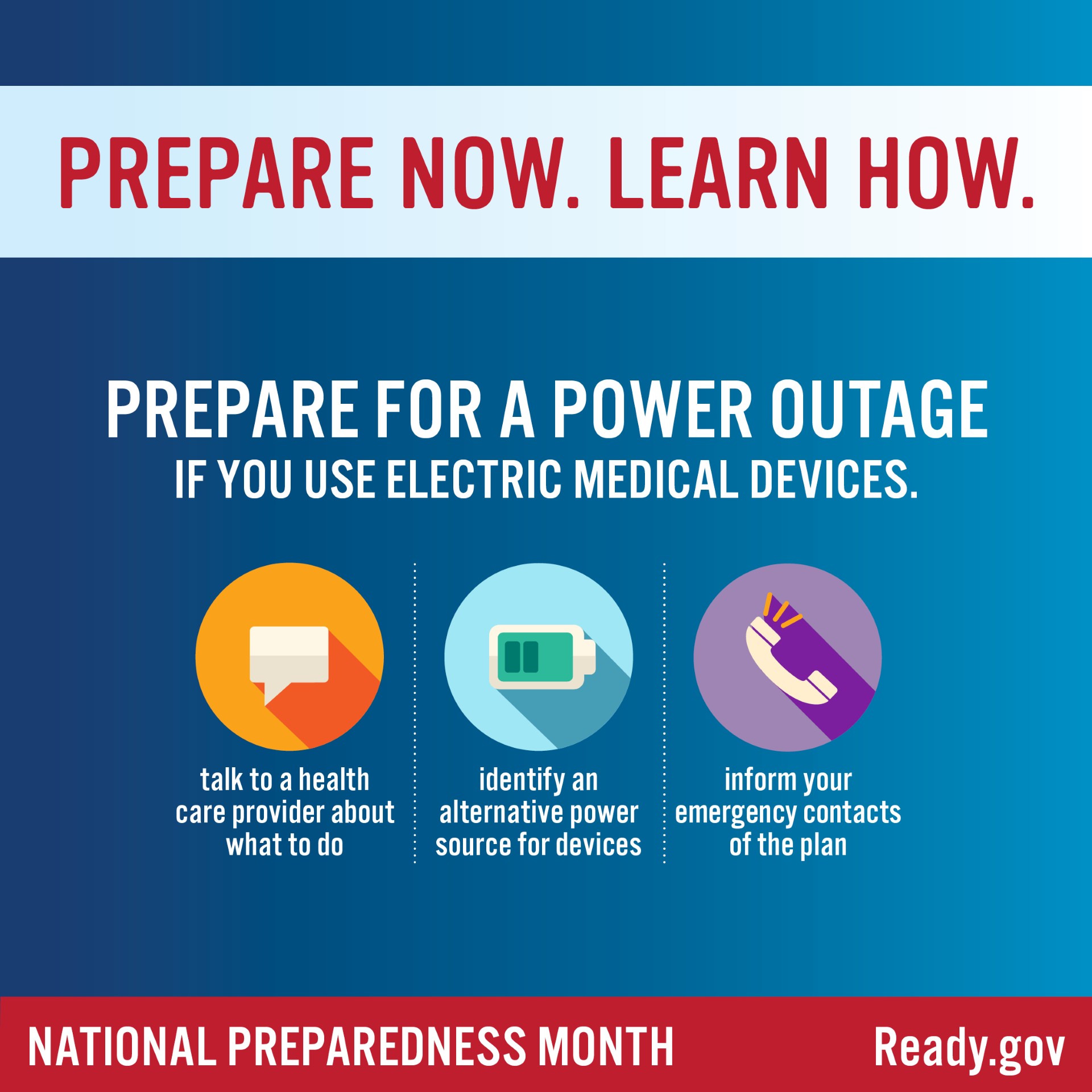
To help educate older adults, people with disabilities, community-based organizations, and others about emergency preparation, ACL created some materials with emergency readiness tips. These are free to download and available to the public.
Social Media Graphics
Additional Materials and Resources
- Emergency Preparedness poster — Poster about emergency preparedness for older adults and people with disabilities.
- Medical Information Card — Downloadable card that captures important information that emergency responders and medical personnel could need during a crisis.
- Communication Assistance Card — Tool to help first responders assist a person whose disability may make it difficult for them to communicate their needs.
More resources about emergency preparedness are available at Ready.gov.